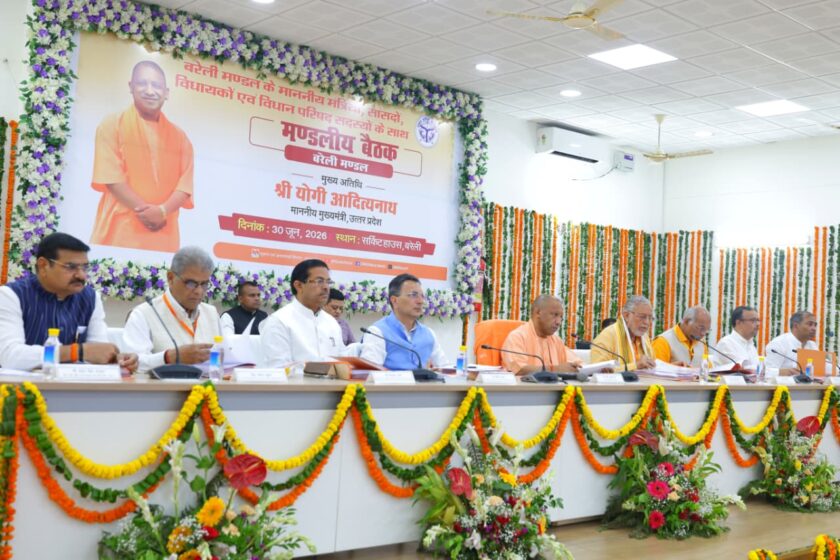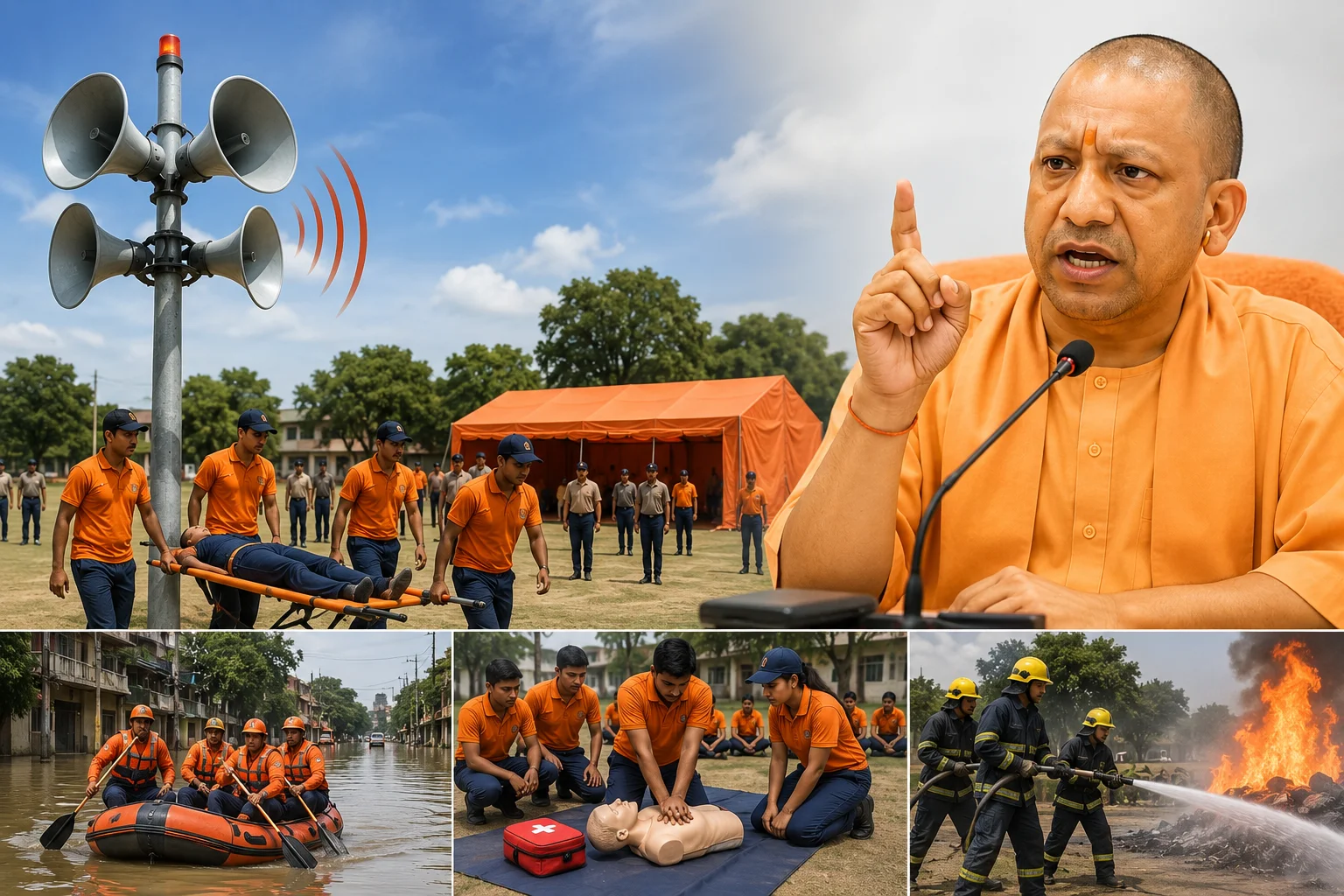
Lucknow: In a major move to fundamentally reshape the state’s emergency response infrastructure, Chief Minister Yogi Adityanath has directed the Civil Defence Department to expand its operational mandate far beyond its historical wartime origins. Speaking during a comprehensive department review meeting in Lucknow, the Chief Minister emphasized that in the contemporary era, civil defence must transition into a highly modernized, proactive force specializing in disaster management, relief and rescue operations, public awareness, and rapid community-level response. A key highlight of the newly approved safety protocols is the strategic deployment of early-warning sirens to alert and evacuate the public well before a natural disaster strikes. To back this state-wide safety transition, the government is introducing an extensive training framework designed to turn the state’s youth into capable first responders. Utilizing the ongoing summer vacation period, the department will actively integrate student volunteers from the National Cadet Corps (NCC) and the National Service Scheme (NSS) into dedicated training modules. These young volunteers, alongside local citizens, will receive specialized instruction in Cardiopulmonary Resuscitation (CPR), advanced first aid, firefighting, and structural search and rescue techniques. To elevate the quality of instruction, Chief Minister Adityanath strictly mandated the recruitment of retired military personnel to lead and oversee these rigorous training drills.
The structural blueprint of the Civil Defence Department carries a long legacy, having been initially established in 1962 following the Indo-China war, with its governing Act enforced in 1968. Through legislative amendments passed in 2009, the organization was formally handed over the comprehensive responsibilities of handling pre-disaster, during-disaster, and post-disaster mitigation phases. The scale of operation has undergone an unprecedented territorial expansion under the current administration. Historically, structural civil defence training was restricted to only 15 select districts. However, in a major administrative milestone completed in May 2025, the government successfully expanded active civil defence units and localized training infrastructures across all 75 districts of Uttar Pradesh. To streamline this massive geographical expansion, District Magistrates have been officially designated as Civil Defence Controllers within their respective jurisdictions. Furthermore, to manage the newly established units, the state has approved the creation of 61 new posts for Deputy Controllers and 60 posts for Assistant Deputy Controllers.
The state’s capacity-building efforts have already registered substantial data-backed achievements under the central government’s specialized training schemes. Across the older 17 operational districts, nearly 5,000 wardens and volunteers have successfully completed core capacity courses. Additionally, an estimated 72,438 school and college students have undergone basic civil defence orientation, while 7,502 Homeguards and 4,633 civilian citizens have been thoroughly certified through advanced disaster management courses. In tandem with these training drives, the state government has approved an upward revision in the daily duty and training allowances for all active volunteers to boost morale and retention.

Looking ahead, the Chief Minister has issued strict orders to expedite recruitment processes to fill all remaining vacancies across the department, with formal requisitions already dispatched to the Uttar Pradesh Subordinate Services Selection Commission (UPSSSC). Approximately 7,500 new volunteers have already been successfully recruited across the 60 newly integrated districts, and their foundational training is currently underway. Chief Minister Adityanath concluded the high-level meet by ordering all district controllers to finalize their regional master plans swiftly and mandated that comprehensive, multi-stakeholder mock disaster drills must be conducted at least twice a year in every single district to maintain peak operational readiness across Uttar Pradesh.